Friday, September 4, 2015

When You Can't Unjam Your Jammed Brother HL-3170CDW Printer

(Another "how to fix" something because I couldn't find the solution on the web.)

What are you supposed to do when your printer says "Jam Tray 1" and there's no paper jam to be found?

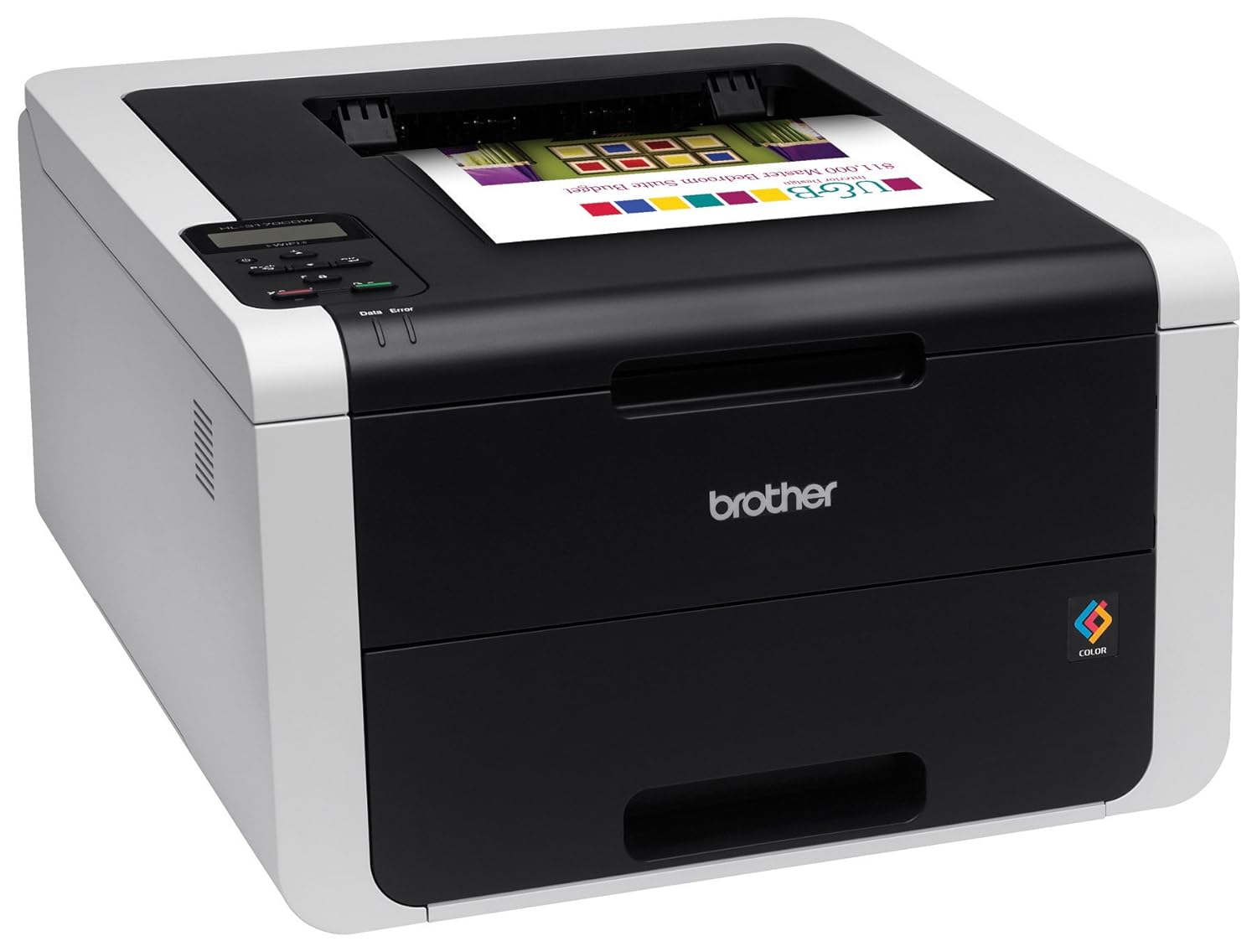
We have this Brother HL-3170CDW printer:

(It's a great printer: fast, prints duplex and reasonably priced. Although, a bit big and heavy.)

And it stopped working due to a paper jam error and despite not finding any paper jammed in it, it still claimed it had paper jam. The manual was unhelpful in solving the problem. Web searches didn't provide a solution. I emailed Brother support, and they gave me the solution.

Thursday, September 3, 2015

How to Fix the Lever that Came Off of Your Kwikset Entry Lock (It Is NOT a Missing Set Screw)

If you have a Kwikset entry lock with a lever, and the exterior lever comes off, and you think the cause is a missing a set screw, it almost certainly is not a missing set screw - the set screw is in fact still there, but screwed in enough into the interior of the post that it looks like it's missing (and no longer able to secure the lever). Jump here for the fix and to skip over any blathering I do in advance of giving the fix.


(This is another in a series of posts to help people fix the same thing I had to fix, where I couldn't find the instructions or found incomplete instructions on the web. Last week I had two things I needed to fix where the fix was given by emailing or talking to the manufacturers' customer support, but not provided on their web sites.)

Sunday, August 30, 2015

My Katrina Story - How I Helped Getting the Power Back On in New Orleans


With the ten-year anniversary of Hurricane Katrina hitting New Orleans upon us, I have a story to tell.

In 2005, I was working at ESCA, a company that wrote software to mange electrical grids. In a power company's control center, displayed on huge screens, the electrical grid and its state was represented graphically. Something like this:


Wednesday, May 27, 2015

550,000: An Absolutely True Story with Four Disappointments for the Reader Along the Way


This story starts with 550,000, the high score on the pinball machine I inherited from my father.

Beyond the memories we have of those who have passed away, we also have physical tokens of their existence. Photographs of those no longer alive are no doubt the most common (although if a photograph only exists in digital media and never printed, you could say it's not a true physical item). But we also have their handiwork, such as the ceramic matzoh plate my father made in the early 90s that looks like a sheet of matzoh: 


To me, some of the most emotionally resonant tokens are things that had been handwritten by the deceased, mainly due to the uniqueness of handwriting that has the immediacy of "This was written by the person who no longer with us, in their own hand, holding a pen or pencil." One example that I have is a label on a large thermos, identifiable as being from the 70s with the orange floral pattern decorating it. It has a large white push button on the top to dispense its contents. It is the type of thermos you find on folding tables at something like a PTA event, used to provide coffee. In fact, on the label is "Decaf Coffee" is written in my mother's handwriting, a precise narrow slanted mix of cursive and block letters that far excels the quality of my handwriting. And I'm going to disappoint you in not showing a picture of the label with my mother's handwriting as I can't find the thermos, somehow misplaced in the move we made four years ago. (Disappointment #1)
Wednesday, April 8, 2015

Build Your Own Pizza (How to Entertain Children #2)

So, you have to not only find a project for six boys 5 to 9 years old, but you also have to provide them with a snack. How about combining the project and the snack? - build your own pizzas.

This is the idea I came up the final time I hosted a meeting for the fathers and sons YMCA Adventure Guides (formerly known as the Indian Guides). It's a father-son program where once a month there would be a meeting at a member's house. For every meeting, some creative group activity would be done. One year when I hosted, the project was making rubberband-powered spool cars. For 2013 it was pizza.
  • Get Trader Joe's ready-made pizza dough. Each packet of dough can make three small pizzas
  • Get a selection of pizza toppings. From Trader Joe's (mostly) I also bought shredded cheese, red sauce, white sauce, pesto, pepperoni, pancetta, mushrooms, chicken, spinach and red pepper. Place the toppings on the table where the pizza making will occur.
  • Split each bag of pizza dough into three approximately equal pieces.
  • With a rolling pin, roll each piece of dough into rectangle about 4" by 8".
  • Place each piece of dough on its own sheet of parchment paper.
    Note regular and whole wheat pizza dough. The kids were not interested in the whole wheat.

  • Pre-heat the oven.
  • Give each child their own rectangle of dough and let them top it however they like.
  • Put the pizzas on cookie sheets (a cookie sheet can take three of the pizzas).
  • Bake as directed on the pizza dough bags.

Finally, for no particular reason, a squirrel eating an apple just outside our dining room as I was putting out everything for the pizza making:


Thursday, March 26, 2015

Why It Took Me a Minimum of 74 Steps to Build a Simple TV Stand

I recently built this TV stand for a spare TV:


Well, that's not quite the final product. The fact is, that there was a major design flaw, which I will explain below.

At a high-level, the process of building it could be broken down into these four steps:
The high-level list of the process was this:
  1. Decide to build a TV stand out of wood.
  2. Cut the pieces of wood.
  3. Screw the pieces of wood together.
  4. Attach the stand to the TV.
The fact of the matter, was that in reality, there were many more than four steps in building the stand. In fact, when I wrote them down there were 74 steps.

The point of this post, is that in designing and building something to its final form, there are often an huge number of steps to get to the end that you never considered when you started the project. There's a process you go through of thinking, designing, building, fixing mistakes in the design, fixing mistakes in the building. Most of the time, things don't go as expected and/or you haven't thought through everything that was needed to be successful.

This can apply to many things designed and built including: a software application, a work of fiction, or in this case a simple TV stand made of a few pieces of wood.

Wednesday, March 18, 2015

The Only Purpose of this Post is to Help People Reflash Their Nexus 7 Tablets

(You probably don't want to read this unless you care about reflashing your 2012 Nexus 7 tablet from Android 5.0 (Lollipop) back to a release that make the tablet usable. After a few missteps I was able to reflash it, and the point of this post is for help others deal with the problems I had while reflashing on a single website, instead of the multiple ones I needed to solve the issues I had.)